


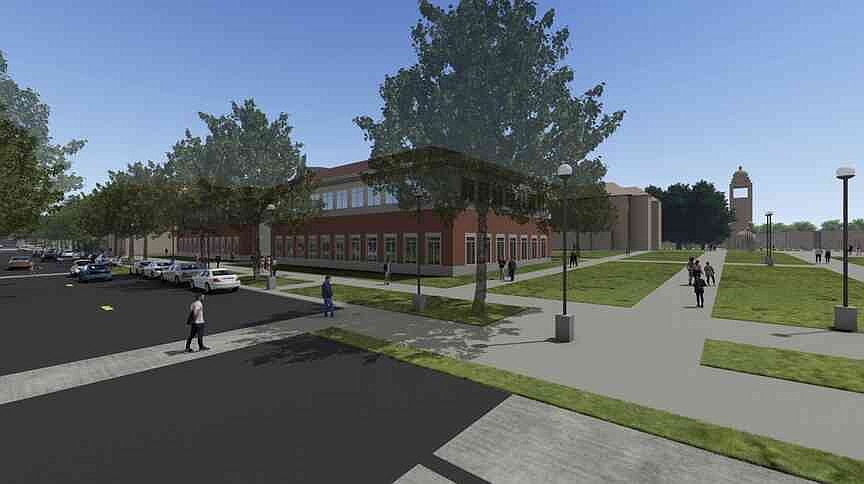
FORT SMITH — The University of Arkansas at Fort Smith has announced it is set to receive $15 million in federal funding to construct and equip a state-of-the-art Center for Mother and Infant Healthcare.
The appropriation was secured by Sen. John Boozman, R-Ark., as part of a broader federal package, according to a news release from university spokesperson Rachel Putman.
“This funding will help make important strides to strengthen critical aspects of maternal and infant care through the development of the Center for Mother and Infant Healthcare at UAFS,” said Boozman. “Bolstering the delivery of these services in the River Valley will reduce preterm births, save lives and improve health outcomes.”
The money will support the development of simulation labs and educational spaces on the ground floor of a new facility at UAFS, aimed at improving outcomes for mothers and infants in the River Valley, the release states. These spaces will allow students and practicing clinicians to gain hands-on experience managing both routine and complex obstetric and pediatric care scenarios.
The labs will also allow offer students the opportunity to work across disciplines, creating training environments where future nurses, physicians and social workers can collaborate as they would in real hospital settings, according to the university.
“The simulation labs in the Center for Maternal and Infant Healthcare will enable students to experience high-risk maternal and newborn emergencies in a controlled, realistic environment before they encounter them in the hospital,” said Dr. Paula Julian, executive director of the School of Nursing. “Through high-fidelity manikins, immersive scenarios and interprofessional teamwork, students will practice recognizing early signs of complications, such as postpartum hemorrhage, hypertensive crises, shoulder dystocia and neonatal distress. They learn to prioritize interventions, communicate with the care team and perform lifesaving skills without risk to real patients. This repeated, hands-on exposure builds clinical judgment, confidence and rapid decision-making, so graduates are prepared to act decisively and save the lives of mothers and infants at the bedside.”
The center will be the first phase of a larger, nearly $30 million, capital project supporting a comprehensive Center for Health Innovation, according to the university.
UAFS Chancellor Terisa Riley said the facility will provide the university with “a meaningful place to educate our students and create an informed community of health care providers in western Arkansas.”
A 250-seat high-tech lecture hall, designed in a theater-style configuration, will support interdisciplinary education for students and the broader health care community. UAFS anticipates hosting classes, professional development workshops, industry conferences, interprofessional simulations and collaborative demonstrations in the space, inviting health care partners such as Mercy, Baptist Health and UAMS there. It will also share educational offerings with fellow educational institutions, including the Arkansas Colleges of Health Education, the PEAK Innovation Center, Carl Albert State College and more, the release states.
The facility will also include an 80-seat seminar space that can be divided into smaller classrooms or breakout rooms. Designed with flexibility in mind, this environment will support everything from faculty-led instruction to small-group workshops, according to the university.
The Center for Maternal and Infant Health will also open its doors to the parents of the region, with a public-access program designed to help expectant parents overcome their labor and delivery fears, according to the release. River Valley families will be able to observe simulated birth and postpartum experiences in the learning laboratories, asking health care professionals their birthing questions and becoming familiar with the procedures they may encounter in a real hospital setting.
“As a mother who gave birth to four babies in less than three years — including a set of twins — I know how different each birthing experience can be,” Riley said. “It is natural for mothers and their partners to have fears and many unanswered questions. We hope that this new program will alleviate both of those concerns.”
In addition to increasing understanding, the program aims to improve communication and foster trust between regional patients and the UAFS students who will eventually become their health care providers.
Arkansas has the highest maternal mortality rate in the U.S., with 92.2 pregnancy associated deaths per 100,000 live births between 2018-2020, according to the Arkansas Maternal Mortality Review Committee’s 2023 Legislative Report. That same report found that 92% of pregnancy-related deaths in Arkansas were considered potentially preventable.
Arkansas holds the third-highest infant mortality rate in the country, as reported by the Centers for Disease Control and Prevention. Newborns and their mothers face increasing risks during and after delivery, many of which could be mitigated through improved provider training and better care coordination.
The new facility comes at a pivotal time for the UAFS College of Health, Education and Human Sciences. A $9.9 million gift from the Windgate Foundation has already empowered the university to double the size of its nursing program over the coming years, dramatically increasing the number of students entering the health care workforce, according to the release.
“Maternal health is a critical issue that impacts thousands of families across the River Valley each year,” said Blake Rickman, executive vice chancellor of advancement. “As a regional public university, UAFS is deeply focused on being part of the solution to the challenges that shape our community. Our ability to address a crisis of this magnitude through education is central to our mission.”
link