DrPH student-led lactation program empowers families, improves women’s health

December 2, 2025
From North Carolina A&T State University

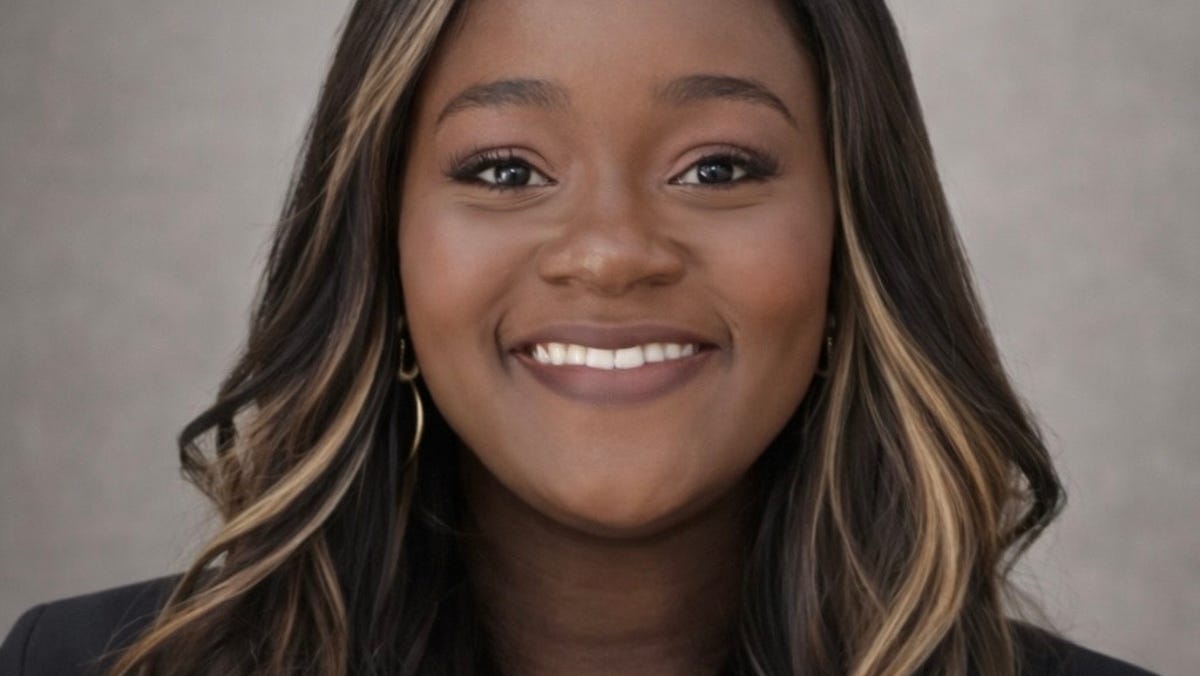
The Human Lactation Pathway 2 Program at North Carolina Agricultural and Technical State University team, left to right, Cierra Murphy-Higgs, Emma Burress, Director and Gillings School DrPH student Janiya Mitnaul Williams, Leatrice Priest, and Jessykah Aytch.
A $2.5 million grant from a global women’s health initiative supported by Melinda French Gates will help the Pathway 2 Human Lactation Training Program expand its reach.
When the College of Agriculture and Environmental Sciences at North Carolina Agricultural and Technical State University (N.C. A&T) launched its human lactation certificate program in 2020, the goal was simply to educate more professionals who could help improve breastfeeding rates in underrepresented communities.
But in five years, the program’s mission has grown exponentially. From opening a no-cost clinic to serve the local community to supporting institutions across the country and around the world, the Pathway 2 Human Lactation Training Program at N.C. A&T has evolved far beyond its initial mandate.
Now, a $2.5 million grant — the largest in the program’s history — will help the program serve even more pregnant and post-partum women.
“When I started this work, I never expected any of this to happen. I was just trying to create more lactation consultants,” said Janiya Mitnaul Williams, the program’s director and a student in the doctoral program in public health executive leadership at the UNC Gillings School of Global Public Health. “But this funding is now allowing us to expand lactation education, strengthen our community work, build a sustainable pipeline of culturally responsive lactation professionals and support students, families and community members who rely on us for accessible perinatal care.”
N.C. A&T’s human lactation program was intended to diversify the lactation workforce and promote breastfeeding’s unsurpassed health benefits among communities with limited resources. Not only is breast milk considered the best nutritional source for babies, it also helps develop their immune systems and protects them from illness. Breastfeeding can reduce a mother’s risk of high blood pressure, Type 2 diabetes and certain cancers. But Black women have below-average breastfeeding rates due to several factors, including inadequate hospital support, lack of culturally appropriate care and education, historical trauma and a lack of unpaid maternity leave and inflexible work environments.
N.C. A&T’s two-semester postbaccalaureate program trains practitioners to provide lactation care that’s personalized, respectful and aligned with patients’ values and backgrounds. It’s the only such program at a public Historically Black College and University (HBCU) and just one of 11 worldwide accredited by the Commission on Accreditation of Allied Health Education Programs.
Over the past five years, N.C. A&T’s human lactation program has produced 49 graduates, including all four members of what Williams calls her “amazing” staff. Most graduates become International Board Certified Lactation Consultants (IBCLCs).
In 2021, the human lactation program began to address breastfeeding disparities by building community. It opened the NCAT Community Lactation Clinic that offers in-person and virtual sessions to support the physical and mental health needs of pregnant and post-partum women. Since it opened, the clinic has impacted more than 2,000 families. The human lactation program, meanwhile, offers prenatal lactation classes, collaborates with local organizations and sends staff members to health fairs and community baby showers.
“We’re building a community for folks to receive high-quality care without barriers,” said Jessykah Aytch, the program’s clinic and content coordinator. “Our goal is to increase our community reach so we can catch individuals who need our assistance but might not know how to access it.”
The N.C. A&T program has ambitions beyond campus and beyond Greensboro. The program has hosted the Uplifting Black and Brown Lactation Success Conference in 2024 and 2025 to help lactation professionals, students and experts from across the country connect and collaborate. To start and sustain lactation programs, NCAT is providing technical assistance to other Minority-Serving Institutions, including the Charles R. Drew University of Medicine and Science in Los Angeles, one of only four Historically Black Medical Colleges in the nation. Mitnaul Williams’ international presentations have led to her and her team supporting efforts to develop lactation programs in Ghana, Jamaica and Nigeria.
The program’s promise attracted the notice of a global women’s health initiative sponsored by American philanthropist Melinda French Gates. In November, the program received a $2.5 million grant from Action for Women’s Health, a $250 million global initiative launched by Gates to improve women’s mental and physical health. N.C. A&T’s human lactation program was one of more than 800 to receive support from among more than 4,000 applicants worldwide.
“Our program has been rooted in our community from the beginning, and our capacity is maxed out,” said Leatrice Priest, the program’s project and accreditation coordinator. “This grant allows us to better support and connect with more community organizations that are reaching out to us.”
Mitnaul Williams said the Action for Women’s Health grant will enable the program to expand in multiple other ways. She envisions partnering with NCAT’s nursing and counseling departments to expand services, collaborating with the College of Engineering to integrate artificial intelligence into early-detection systems, and establish the Center for Community-Driven Maternal Health to formalize its work.
“We want to see the pendulum swing for Black and brown families away from formula feeding and back toward breastfeeding,” Mitnaul Williams said. “With this generous grant and our ongoing work, we’re creating a movement that allows us to reclaim and reimagine what perinatal health should look like in our communities.”
Contact the UNC Gillings School of Global Public Health communications team at [email protected].
link